Applying a thin layer of blood on weakly absorbing tissue enhances light absorption.
Wausau, WI (June 26, 2026) – 445 nm diode lasers have already been used successfully and safely for cholesteatoma surgery. Due to the high absorption in hemoglobin, they generally provide a good combination of cutting precision and hemostasis. However, the ablation of low-absorbing and strongly scattering anemic tissue, such as keratinizing squamous epithelium of the cholesteatoma, becomes challenging at low laser power. The initiation of ablation often occurs abruptly and not reproducibly. This study investigated whether a thin layer of blood can improve the ablation by applying blood layers.
The study, led by Paula Enzian, is titled, “Enhancing the Efficacy of Noncontact Laser Ablation of Weakly Absorbing Cholesteatoma Tissue Using a Blood Layer.” The basic science article, published in Lasers in Surgery and Medicine (LSM), the official journal of the American Society for Laser Medicine and Surgery, Inc. (ASLMS), was selected as the July 2026 Editor’s Choice.
“445 nm diode lasers (blue light) are well-suited for ENT surgery because their wavelength is well absorbed by hemoglobin. This provides a good combination of excellent cutting precision and hemostasis,” Enzian said. “However, in middle ear surgery, white cholesteatoma tissue also has to be removed. The ablation of such weakly absorbing tissue at low power levels may start with a significant delay, but then occurs abruptly. This study shows that a thin layer of blood on the tissue can enable precise ablation by concentrating the energy input to a smaller volume.”
Tissue ablation was performed with a 445 nm diode laser at continuous wave powers of 1W and 4W at working distances of 1mm and 2mm to the distal tip of the multimode optical fiber that was being moved with a speed of 5 mm/s across the tissue. Ablation depths were measured using optical coherence tomography (OCT). With a blood layer thickness of 50 - 100 µm, the maximum ablation depth of ~370µm was measured with a power of 4 W. Without blood, no ablation was achieved.
The ‘optimal blood layer thickness’ depends on various parameters, such as laser power and working distance. These relationships can be derived from a simple theoretical model presented in the article. The experimental results closely matched model predictions, confirming their validity in estimating the ablation outcomes.
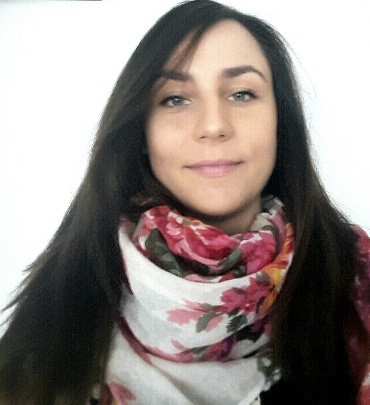
Paula Enzian is a PhD Candidate at the Medical Laser Center Lübeck GmbH, where she has been conducting research on advancing laser-based medical applications in ENT medicine for the past four years. With a background in Medical Engineering (B.Sc. & M.Sc., University of Lübeck), which she completed in 2019, her research and daily work focus on biomedical optics, laser physics, and medical imaging. Her previous research involved laser irradiation applications in drug delivery systems (liposomes), age-related macular degeneration (AMD), and cancer therapy, with a strong emphasis on imaging techniques such as Fluorescence Lifetime Imaging (FLIM).
Editor’s Choice is an exclusive article published in LSM, the official journal of ASLMS. View the complete manuscript.